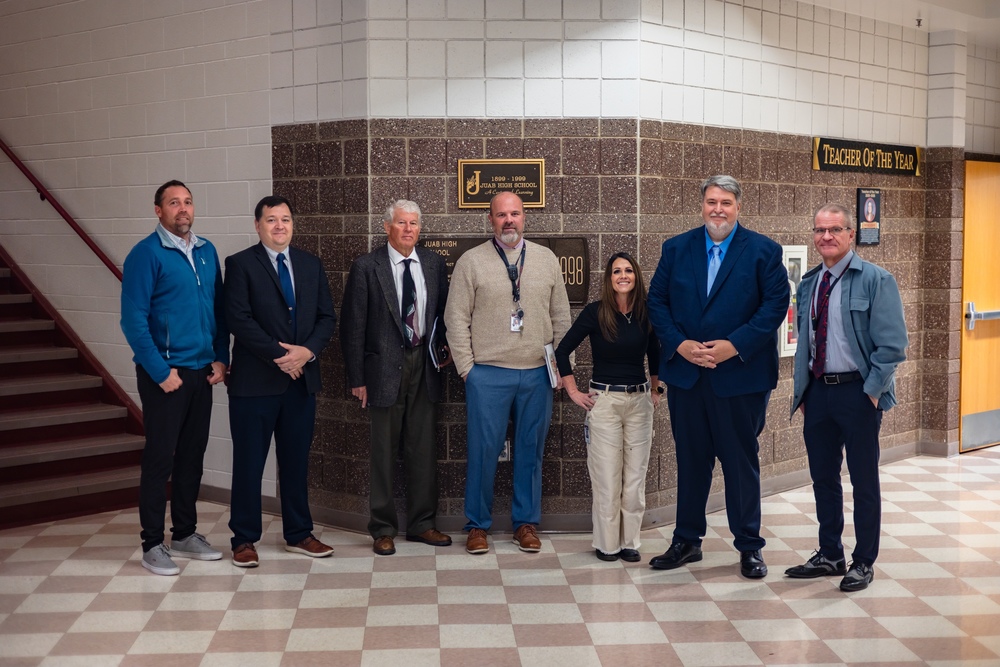
Juab High School students are getting a unique, hands-on opportunity to explore real-world science thanks to a new partnership with the Desert Research Institute (DRI). Earlier this month, a team of nationally recognized scientists visited the school to install a Raspberry Shake seismometer, kicking off a multi-year STEM initiative designed to give students meaningful exposure to seismology, earth science, and engineering.
The effort is part of Shaking Up STEM, a pilot program targeting schools along the Intermountain Seismic Belt—one of the most active earthquake regions in the United States. Juab High School is among the first schools selected for the program’s Phase I rollout. Vice Principal Jackson Jones shared “I think it’s a privilege to be able to be one of the first schools to do it. It gives us the opportunity to work hand in hand with new partners, and we’re at a spot where it’s innovative. Our kids have an opportunity to be at the forefront of this partnership by receiving hands-on learning experiences. We believe those experiences will open up new pathways and opportunities for anyone, and especially students interested in these fields.”
A Hands-On Introduction to Earth Science
During their visit, DRI scientists Dr. Dale Anderson and Dr. Cleat Zeiler met with school leadership and science staff to introduce the equipment and outline the educational opportunities available to students. The Raspberry Shake sensor—a compact, affordable, high-precision instrument—will allow Juab students to monitor vibrations and seismic activity in real time. Footsteps in the classroom, trucks driving past the school, and even earthquakes across the globe can be visualized instantly through the system’s data display. JHS Science teacher Zac Taylor shared his enthusiasm for the opportunities that lie ahead due to this, “Living basically on a major fault line always makes talking about earthquakes exciting. I am so thankful for this opportunity to use real time data from the seismometers to make a more direct connection to earthquakes. In fact, only a few days after having it up and running, we were able to see the large earthquake in Japan on December 8th, and measure the seismic waves from it that reached all the way to Utah.”
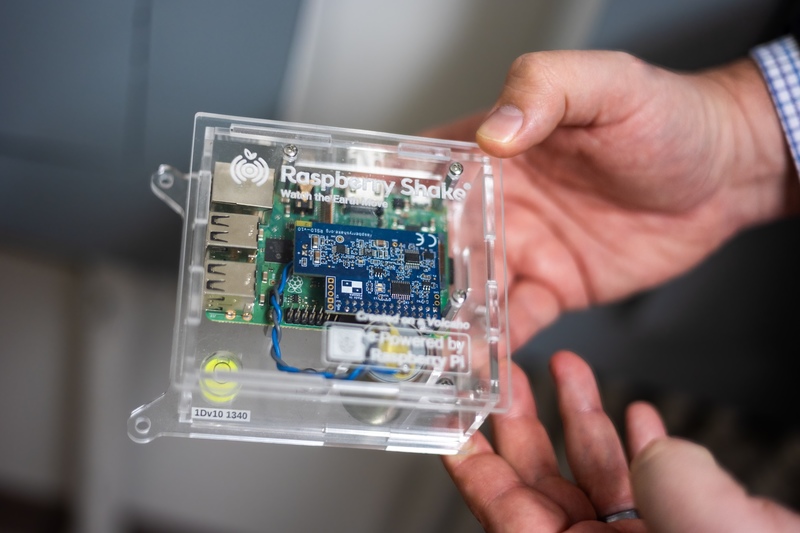
With the device installed, students will apply math, physics, engineering, and data analysis skills to better understand the world around them.
Connecting Students to Their Own Backyard
Because Juab sits along the Intermountain Seismic Belt—including proximity to the Wasatch Fault Zone—local seismic activity provides highly relevant learning opportunities.
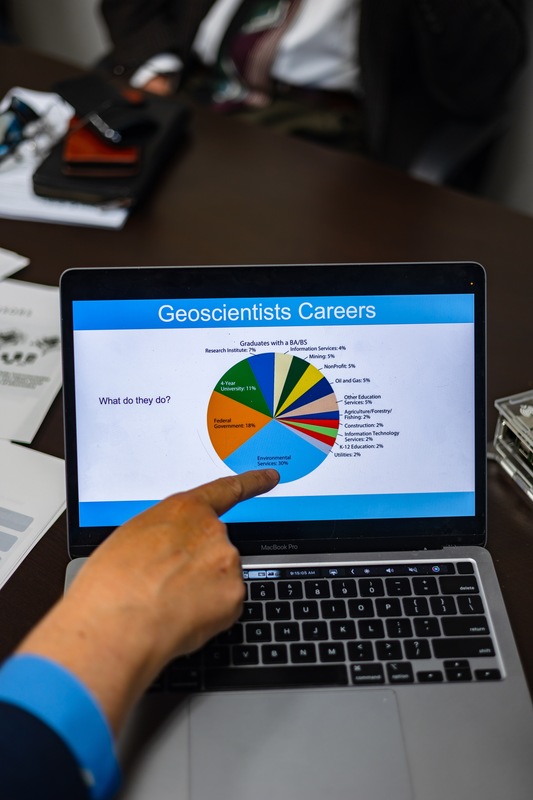
The initiative introduces students to potential career pathways in geoscience, engineering, national security, and related STEM fields. Dr. Anderson, who grew up in Nephi, expressed a strong desire to give back by helping local students connect with real scientific work. “I remember learning of the Wasatch fault from Mr. Jay Woodard, my Juab High School science teacher. He would point to visible evidence of the fault in the hills east of Nephi and Mona. My Desert Research Institute colleagues and I decided that Juab High School would be the perfect starting point to move south with the build of the Utah High School Seismic Network because of diverse seismic signal sources like earthquakes, mining explosions and city noise. The science opportunities from this seismic network will be invaluable to high school students, and we intend to offer these students opportunities to collaborate on government research.”
Part of a Larger STEM Vision
Juab’s participation in this pilot phase gives the school access to curriculum materials, professional support, and opportunities to collaborate with schools and researchers across the I-15 corridor. In future phases, the program aims to expand into other Utah and Nevada schools, creating a regional network of student-operated seismic sensors.
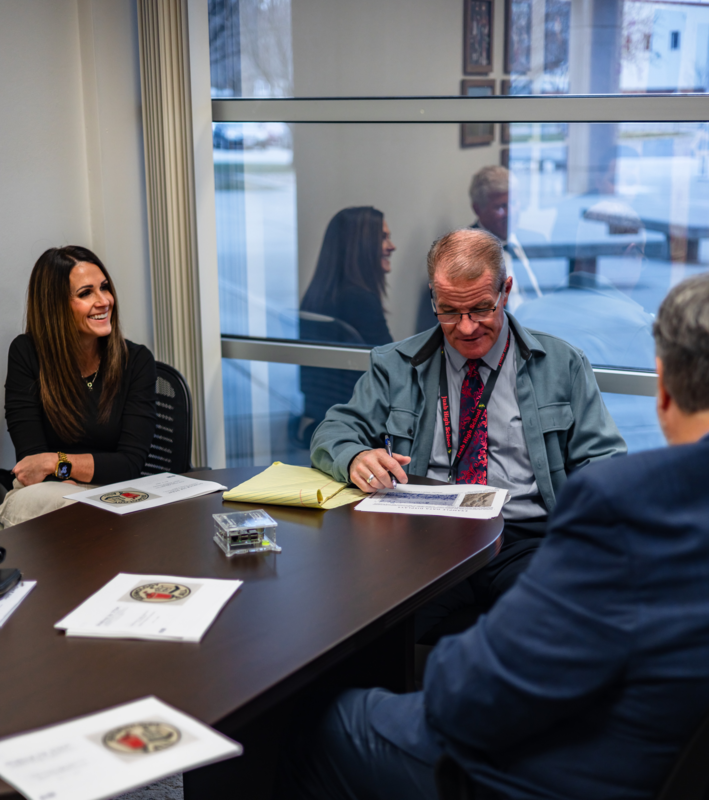
During the meeting with JHS Administration and Desert Research Institute, Principal Quarnberg emphasized that opportunities like this align perfectly with the district’s commitment to expanding student pathways, especially in science and technical fields.
A Powerful Opportunity for Students
With the sensor now active on campus, Juab High School students will soon begin analyzing live seismic data, participating in hands-on labs, and contributing to global citizen-science efforts that include thousands of Raspberry Shake devices worldwide. This partnership provides a powerful and engaging entry point into real-world science and an exciting step forward in Juab’s ongoing work to offer students meaningful learning experiences and pathways to success.
About DRI
We are Nevada’s non-profit research institute, founded in 1959 to empower experts to focus on science that matters. We work with communities across the state — and the world — to address their most pressing scientific questions. We’re proud that our scientists continuously produce solutions that better human and environmental health. Scientists at DRI are encouraged to folow their research interests across the traditional boundaries of scientific fields, collaborating across DRI and with scientists worldwide. All faculty support their own research through grants, bringing in nearly $5 to the Nevada economy for every $1 of state funds received. With more than 600 scientists, engineers, students, and staff across our Reno and Las Vegas campuses, we conducted more than $59 million in sponsored research focused on improving peoples’ lives in 2025 alone. At DRI, science isn’t merely academic — it’s the key to future-proofing our communities and building a better world. For more information, please visit www.dri.edu.